Biggest Seenda Mou 302 Vertical Wireless Mouse Buying Mistakes (And How to Avoid Them)
Vertical mice promise comfort, reduced wrist strain, and better posture during long computer sessions. The Seenda Mou 302 Vertical Wireless Mouse is one of the more affordable options in that category, attracting buyers who want ergonomic benefits without a premium price. However, shoppers commonly make avoidable mistakes when choosing and using vertical mice — mistakes that can lead to disappointment, discomfort, or returns. This article explores the most frequent buying errors specifically related to the Seenda Mou 302 Vertical Wireless Mouse (and vertical mice like it), explains why they matter in real-world use, and offers practical guidance for avoiding them.
Introduction: Why buying the right vertical mouse matters
Many people switch to a vertical mouse to ease discomfort caused by prolonged mouse use: typing-heavy roles, data entry, software development, design work, and even web browsing. In real-world use, a mouse that feels comfortable for one person can feel awkward for another. Small differences in angle, button placement, or weight distribution change how the hand and forearm load muscles and tendons, and those differences determine whether the Seenda Mou 302 truly helps or simply becomes an inconvenient accessory.
Understanding common mistakes — from misjudging hand size to ignoring connectivity quirks — leads to better outcomes. The sections below analyze the Seenda Mou 302 in practical terms and then lay out precise steps to avoid the most frequent purchasing pitfalls.
Detailed product analysis: Seenda Mou 302 Vertical Wireless Mouse
Design and ergonomics
The Seenda Mou 302 follows the vertical mouse design language: an upright profile that places the palm in a handshake position. In everyday use this reduces wrist pronation compared with a flat mouse and tends to shift movement to the forearm rather than the wrist, which many ergonomic specialists recommend.
Practical buyers should pay attention to three ergonomic elements:
- Grip fit: Vertical mice are not one-size-fits-all. The Seenda Mou 302 is designed for average hand sizes; users with very small or very large hands should test the grip or compare dimensions before purchase.
- Angle and slope: The degree of tilt decides muscle engagement. Some people prefer a gentle tilt; others need a steeper angle for relief. The Mou 302 aims for a middle ground, which helps many but not everyone.
- Thumb rest and button placement: Button placement affects accidental presses and ease of use. The Seenda Mou 302 positions the thumb buttons for common browsing tasks, but users who rely heavily on programmable side buttons should verify the layout against their workflow.
Performance and sensor behavior
Real-world performance of an ergonomic mouse depends on sensor reliability and tracking consistency. Users report that affordable vertical mice like the Seenda Mou 302 generally perform well for office tasks — pointing, clicking, scrolling, and routine editing. For high-precision work such as pixel-perfect graphic retouching or competitive gaming, a specialized high-performance sensor is preferable.
Buyers should evaluate:
- Tracking smoothness: Test cursor jitter, acceleration, and responsiveness across the desktop and in the applications used most often.
- DPI settings: If the Mou 302 includes adjustable DPI, it provides useful flexibility for different tasks; but some users find the available steps too coarse. Check whether the DPI levels match common workflows (e.g., document editing vs. fine design work).
Connectivity and latency
The practical wireless experience is shaped by two factors: the connection method (2.4GHz receiver vs Bluetooth) and how the receiver or Bluetooth pairing behaves in the user’s environment. Office setups with many wireless devices sometimes suffer interference or pairing issues.
Practical advice for buyers:
- If the Mou 302 uses a USB receiver, confirm whether it is a dedicated receiver or a unified dongle that some laptops already block in tightly packed USB hubs.
- For Bluetooth use, check pairing reliability with the intended operating system and whether quick switching between devices is supported.
Battery and charging considerations
Battery performance is a frequent real-world complaint with budget wireless peripherals. Users often misjudge how often they will use the device and whether they prefer replaceable batteries (AA/AAA) or a built-in rechargeable battery.
Buyers should decide which trade-offs they prefer: the convenience of recharging versus the ability to swap disposable batteries on long trips. Also consider whether the mouse supports charging while in use or the time it takes to achieve a full charge.
Buttons, scroll wheel, and software
For many users the mouse is their primary input device: secondary buttons, scroll behavior, and software customizations matter far more than aesthetic details. The Seenda Mou 302 offers the usual complement of left/right clicks, a scroll wheel, DPI button(s), and one or two thumb buttons — sufficient for general productivity.
Key buyer-focused points:
Find top-rated Laptops & Computers products at great prices.
View Offers →- Button feel and durability: Cheap switches can develop double-click issues over time. Look for user feedback on longevity.
- Scroll wheel action: Smooth, predictable scrolling matters for spreadsheets and long documents; a notchy or loose scroll wheel reduces efficiency.
- Driver support: If the mouse ships with configurable software, confirm which OS versions are supported and whether macros or button remaps persist across systems.
Build quality and materials
Spending time reviewing materials, finish, and assembly quality is sensible: a matte plastic finish might collect oils and become tacky, while textured coatings can wear unevenly. The Mou 302 is positioned as an affordable ergonomic solution, so expectations should be calibrated against price. However, buyers still expect stable button housings and a consistent seam fit.
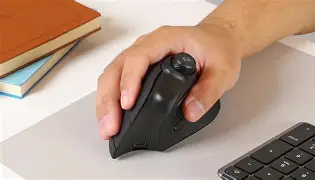
Common buyer mistakes with the Seenda Mou 302 and how to avoid them
Mistake 1: Buying without measuring hand size or trying the grip
Why it matters: A vertical mouse must match hand dimensions to deliver comfort. A mouse that’s too tall or narrow will force fingers into awkward positions.
How to avoid it: Measure palm length and width, compare to manufacturer dimensions, and, when possible, test a similar vertical mouse in person. If shopping online, buy from a retailer with a generous return policy and read grip-fit feedback from users with similar hand sizes.
Mistake 2: Ignoring the intended use (productivity vs precision work)
Why it matters: Vertical mice like the Seenda Mou 302 excel at reducing wrist strain for general office tasks but are not always the best choice for tasks demanding sub-pixel precision.
How to avoid it: Match the mouse to the primary task. For coding, email, and spreadsheet work, prioritize comfort. For detailed graphic design, verify the sensor’s DPI range and consider alternatives if greater precision is necessary.
Mistake 3: Overlooking wireless connectivity quirks
Why it matters: Interference, USB port placement, and Bluetooth compatibility can make a mouse feel laggy or disconnect frequently.
How to avoid it: Check whether the mouse uses a USB receiver or Bluetooth, test the connection in the actual work environment, and keep an inexpensive USB extension or USB hub handy to position the receiver away from interference.
Mistake 4: Not considering battery preferences
Why it matters: Running out of battery during a critical task is a painful and avoidable problem.
How to avoid it: Decide whether a rechargeable or replaceable-battery model is preferable. If the Mou 302 uses an internal battery, verify charge time and whether it supports charging while in use. If it uses AA/AAA, keep spares accessible.
Mistake 5: Assuming software customization is available
Why it matters: Without software, programmable buttons may be limited, reducing workflow improvements that come from macros or button remaps.
How to avoid it: Confirm driver support and whether the mouse includes software for button remapping. If multi-device support is crucial, look for explicit documentation on those features.
Mistake 6: Overlooking return windows and warranty
Why it matters: Ergonomic fit is personal. Short return windows or minimal warranty coverage make it difficult to evaluate long-term comfort or potential hardware defects.
Looking for the best Laptops & Computers deals on Amazon?
See Deals →How to avoid it: Buy from sellers with 30-day (or longer) return policies and at least a one-year warranty. Preserve receipts and test the mouse in daily workflows immediately to verify comfort and function.
Pros & Cons
- Pros:
- Ergonomic handshake posture reduces wrist pronation and can ease repetitive strain for many users
- Simple button layout suitable for standard office workflows
- Wireless freedom reduces cable clutter and enables cleaner desk setups
- Typically affordable compared with premium ergonomic mice
- Cons:
- Fit is highly personal — may not suit very small or very large hands
- Not optimized for high-precision tasks for some users
- Depending on the variant, connectivity or battery behavior may vary
- Durability of switches and scroll wheel may be lower than premium competitors
Comparison table
| Feature | Seenda Mou 302 Vertical Wireless Mouse | Typical Mid-Range Vertical Mouse | Premium Vertical Mouse (e.g., high-end brand) |
|---|---|---|---|
| Form factor | Upright handshake shape for average hands | Varies — some offer size options or taller profiles | Ergonomically refined, with more sculpted rests and multiple size options |
| Connectivity | Wireless (2.4GHz receiver or Bluetooth depending on variant) | Wireless or wired options available | Multi-device (Bluetooth + receiver) with quick switch |
| Sensor / Precision | Good for productivity; adjustable DPI common in this class | Varied; some include higher DPI for precision work | High-precision sensors with wide DPI ranges and stable acceleration |
| Battery | Rechargeable or replaceable battery options depending on model | Often replaceable for long trips | Long battery life and fast charging, sometimes usable while charging |
| Software | Basic to none; check variant for configuration software | Some include configurable drivers | Comprehensive software with macros and profiles |
| Price tier | Budget-friendly | Mid-range | Premium |
| Best for | Office work, general computer tasks, users seeking ergonomic relief on a budget | Users wanting balance of comfort and features | Power users, professionals who need both ergonomics and precision |
Buying guide: Avoid the common pitfalls
1. Match the mouse to the primary use case
Identify what most of the mouse time will look like. For long stretches of email, code, or spreadsheets, prioritize comfort and a handshake position. For precision design work, emphasize sensor quality and fine DPI adjustments.
2. Measure and compare — don’t rely on photos
Measure palm length and width, and compare with the product dimensions when available. Photos can be deceptive; a mouse that looks small may feel too narrow or tall in hand.
3. Test connectivity in the actual workspace
If possible, test the Seenda Mou 302 or a similar unit on the laptop and desktop it will be used with. Some work environments with many wireless devices or metal surfaces can introduce latency or dropouts. For users who switch between multiple machines, prioritize multi-device pairing or a quick receiver switch.
4. Consider long-term maintenance
Ask about the scroll wheel, switch type, and warranty. If a mouse will be used in a demanding environment (e.g., shared workstation, intensive clicking), prioritize a model with a proven switch life and an accessible warranty.
5. Plan for power management
Choose between rechargeable and replaceable batteries based on travel, downtime tolerance, and desk setup. Rechargeable models reduce long-term waste, but replaceable batteries allow instant swaps during travel or conferences.
6. Read hands-on reviews and user reports
Hands-on reviews and detailed user feedback reveal the day-to-day experience: whether buttons develop issues, how reliable the pairing is, and whether the angle provides sustained relief. Prioritize reports from users who describe similar workflows to one’s own.
7. Confirm software and OS compatibility
If a buyer depends on button remapping or DPI switching software, verify that the software supports the operating system in use. Some inexpensive mice only provide full software features on Windows, with reduced functionality on macOS or Linux.
Real-world use cases and buyer concerns
To ground the guidance, here are several realistic scenarios and how the Seenda Mou 302 fits each one:
- Office worker (email, spreadsheets, video meetings): The Mou 302's vertical posture reduces wrist strain across a typical 8-hour day. Prioritize comfort and battery life.
- Software developer or writer: Lots of keyboard time interleaved with mouse navigation — the handshake position helps reduce cumulative wrist stress. Choose the Mou 302 variant that offers reliable wireless switching if using multiple machines.
- Graphic designer or photo editor: Precision is crucial. Test the sensor's DPI and tracking on detailed work; if it lacks the responsiveness required, consider a higher-end vertical mouse or use a traditional low-profile mouse for precision tasks.
- Traveler or mobile professional: A compact, receiver-based or Bluetooth-enabled version that supports quick pairing is ideal. Confirm battery type and charging options.
- Users with existing wrist pain or mild carpal tunnel symptoms: Vertical mice can help, but ergonomics are personal. Use a trial period to determine benefit and consult a clinician for severe symptoms.
Conclusion
The Seenda Mou 302 Vertical Wireless Mouse represents an accessible route into ergonomic pointing devices, especially for people seeking relief from wrist pronation during everyday computer tasks. Buyers frequently stumble by assuming all vertical mice are interchangeable, neglecting hand fit, misjudging connectivity needs, or overlooking battery and software expectations. Those mistakes are avoidable with a bit of preparation: measure the hand, match the mouse to primary tasks, test connectivity in the real workspace, and check return and warranty policies.
When approached thoughtfully, the Seenda Mou 302 can be a practical, money-conscious choice that improves comfort and reduces discomfort from long-term mouse use. The key is to treat the purchase as a personal fit decision rather than a purely technical one — ergonomics is as much about how the device feels in daily workflow as it is about listed specifications.