Head-to-Head: Lenovo Thinkpad E14 Gen 6 Laptop vs Wachete Web Content Monitoring (Detailed Comparison)
At first glance, comparing a business-class laptop to a web content monitoring service may seem like comparing apples to orchestral scores. One is a piece of physical hardware designed to be the daily workhorse for professionals; the other is a cloud-based tool that watches web pages, APIs, and online content for change. Yet for many buyers—small business owners, marketing teams, product managers, and IT administrators—these two products are complementary components of a productive digital workflow. This article examines the Lenovo Thinkpad E14 Gen 6 laptop and Wachete Web Content Monitoring service in detail, explains real-world use cases, and helps readers decide which investment or combination best fits their needs.
Introduction to the contenders
Lenovo Thinkpad E14 Gen 6
The Thinkpad E14 Gen 6 is Lenovo’s mainstream business laptop that balances durability, security features, performance, and affordability. Positioned for professionals who need a reliable machine for office productivity, light content creation, and remote work, the E14 brings ThinkPad design cues—robust chassis, comfortable keyboard, and enterprise-friendly features—into a cost-conscious package.
Wachete Web Content Monitoring
Wachete is a web monitoring service that tracks changes to web pages, specific content regions, APIs, RSS feeds, and online documents. It notifies users of updates, provides historical change logs, and integrates with notification channels. Wachete is aimed at teams and individuals who need automated tracking for brand mentions, pricing, competitor changes, regulatory content, or website uptime and content integrity.
Detailed product review and analysis
Design and build: Thinkpad E14 Gen 6
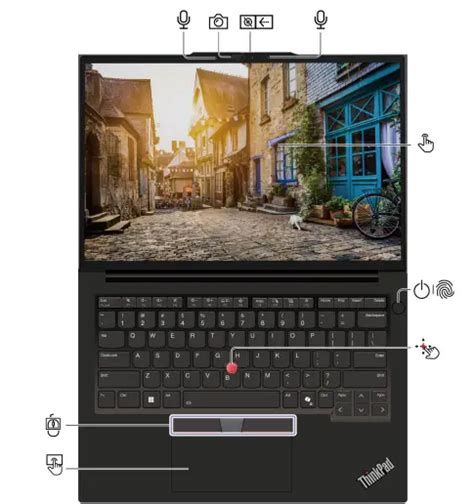
The Thinkpad E14 Gen 6 follows Lenovo’s understated, business-first aesthetic. The chassis is typically a combination of aluminum and reinforced plastic depending on configuration, delivering a solid keyboard deck and hinge system. The 14-inch form factor is intentionally chosen—small enough for portability, large enough for productive screen real estate. Build quality is generally better than consumer-grade alternatives at similar price points, with MIL-STD tests often referenced in the ThinkPad lineup (though exact certification varies by SKU).
Buyers who travel or move frequently will appreciate the compact footprint and the weight-to-rigidity ratio. The keyboard—an oft-cited ThinkPad advantage—remains one of the E14’s strongest attributes: deep travel, durable keycaps, and a layout designed for long typing sessions. TrackPoint and precision touchpad options support different input preferences for professional use.
Performance and configuration
The E14 Gen 6 can be configured with mid- to upper-range Intel or AMD mobile processors, typically offering multi-core performance adequate for office suites, multiple browser tabs, light image editing, video conferencing, and virtualization at the entry level. RAM and storage options usually allow upgrades: dual-channel RAM support and M.2 NVMe storage give room for performance scaling.
For buyers who require more CPU/GPU horsepower, the E14 is not a high-end workstation. It is best evaluated against the buyer’s regular workload—if that workload includes sustained heavy video rendering, 3D modeling, or large-scale data processing, a workstation-class laptop would be a better fit.
Ports, connectivity, and battery life
Practical port selection is a ThinkPad hallmark, and the E14 typically includes a mix of USB-A, USB-C (with varying levels of functionality depending on SKU), HDMI, Ethernet (or optional adapter), and a headphone jack. This makes it easy to connect monitors, external storage, and accessories without relying on docks or adapters in many scenarios.
Battery life depends heavily on configuration and workload. For light productivity (document editing, email, web browsing), the E14 often achieves a full workday; under heavier loads or when using discrete graphics (if present), users may see shorter runtimes. Fast-charging support and power delivery over USB-C are helpful for modern workflows.

Security and manageability
ThinkPads commonly include business-oriented security features: TPM for hardware encryption, optional fingerprint reader, IR camera for Windows Hello, and BIOS-level protections. The E14 Gen 6 is aligned to business IT needs with these features and is manageable through common enterprise tools, making it suitable for small IT teams that need to secure and manage fleets.
Shop the latest Electronics picks on Amazon.
View Offers →Real-world use cases for the ThinkPad E14 Gen 6
- Remote consultants who need a reliable, portable machine for client meetings and presentations.
- Marketing professionals running content creation tasks and frequent video calls.
- Small business owners and finance teams who need secure, dependable daily drivers.
- Students and researchers who require a robust keyboard and long-term reliability for writing and analysis.
What Wachete does and how it works
Wachete specializes in automated monitoring of public and restricted web content. Users create monitors for URLs, define the frequency of checks, specify the portion of a page or the API to watch, and configure notifications. When changes are detected, Wachete records the before-and-after snapshot, highlights differences, and sends alerts via email, Slack, webhooks, and other integrations. The service also provides historical logs that are useful for audits, compliance, and trend analysis.
Key features and performance
Wachete’s important capabilities include:
- Flexible monitoring: entire pages, custom page segments, API endpoints, and files.
- Frequent checks: paid plans allow shorter intervals for near real-time detection.
- Change visualization: highlighted differences and historical charts for content evolution.
- Notifications and integrations: email, push notifications, Slack, webhooks for custom workflows.
- Access control and authentication: monitors that require login via form submission or basic auth.
Uptime and detection accuracy are central performance metrics. For most business use cases, Wachete’s detection is reliable enough to replace manual checking of critical pages. However, highly dynamic sites with client-side rendering or frequent non-content changes may require more advanced configuration (e.g., snapshots, scripting) to avoid false positives.
Real-world use cases for Wachete
- E-commerce teams tracking competitor price changes and product availability.
- Legal and compliance teams monitoring regulatory announcements or policy pages for updates.
- SEO and content teams watching SERP features, published pages, or backlinks for changes.
- IT and devops teams checking status pages, configuration pages, or documentation for unauthorised changes.
Support, privacy, and reliability considerations
For both products, support expectations and privacy policies should be assessed. Lenovo provides hardware warranty options and business support tiers that matter for on-site or rapid repairs. Wachete, as a cloud service, operates under service-level norms for availability and data retention—teams that require strict data residency or contractual SLAs should review terms carefully.
Pros & Cons
Lenovo Thinkpad E14 Gen 6
- Pros: Durable build, excellent keyboard, good port selection, enterprise security features, upgradeable RAM and storage.
- Cons: Not a high-end performance machine for heavy creative workloads; battery life varies by configuration; screen quality depends on chosen panel.
Wachete Web Content Monitoring
- Pros: Flexible monitoring options, historical change logs, useful integrations, time-saving automation for content tracking.
- Cons: Dynamic or script-heavy pages can produce noise or require advanced setup; pricing for high-frequency checks can increase costs; data residency and SLAs vary by plan.
Side-by-side comparison
| Attribute | Lenovo Thinkpad E14 Gen 6 | Wachete Web Content Monitoring |
|---|---|---|
| Primary purpose | Portable workstation for productivity, meetings, and light content creation | Cloud monitoring of web content, APIs, and feeds |
| Primary users | Professionals, students, small business teams | Marketing, SEO, legal, IT, product teams |
| Cost model | One-time hardware purchase + optional warranty/support | Subscription (tiered by checks, features, and frequency) |
| Setup complexity | Out-of-box setup, OS and app installs | Cloud setup with monitors and notification rules (low-to-medium complexity) |
| Mobility | High (physical portability) | Accessible anywhere via browser or mobile notifications |
| Offline use | Fully usable offline | Not usable offline; requires internet and cloud access |
| Integration options | Local peripherals, enterprise management tools | Webhooks, Slack, email, API, and third-party automation |
| Data ownership & storage | Local storage plus cloud backups if configured | Stored in Wachete cloud—data retention determined by plan |
| Scalability | Scale by adding devices or upgrading components | Scale by adding monitors and higher-tier subscriptions |
| Ideal complementary use | Running monitoring dashboards, analyzing alerts, producing content | Automatically delivering web-change alerts to the user’s laptop or team |
Buying guide: How to decide and combine them
Deciding between these products is a category error; most teams will benefit from both in different ways. The right question is less “Which is better?” and more “Which do I need now, and how do they work together?” Below are practical considerations to help choose and combine investments.
1. Clarify the immediate problem to solve
If the immediate need is a reliable, secure machine for daily work, the priority should be the ThinkPad E14 Gen 6 or an equivalent laptop. If the problem is monitoring competitors, legal notices, or site content without manual checks, Wachete (or a similar monitoring service) solves that need.
2. Evaluate total cost of ownership
For the laptop, consider warranty, potential upgrade costs, and expected refresh cycle (3–5 years for many business users). For Wachete, evaluate the subscription tiers based on monitoring frequency and number of monitors; factor in the labor saved by automation and the potential cost of missed changes if monitoring is insufficient.
3. Consider the team workflow
Think about where alerts should land. A single analyst may prefer email notifications routed to their laptop, while larger teams should use Slack or webhook integrations to tie monitoring into ticketing systems. The ThinkPad provides the mobile workstation; Wachete supplies the signals. Plan communications and escalation so that alerts translate into action.
4. Performance vs. frequency trade-offs
If a user is a heavy multitasker (many browser tabs, virtual machines), choose a ThinkPad configuration with adequate RAM and CPU. If a business needs near-real-time content detection across dozens or hundreds of pages, budget for a higher Wachete tier or distribute monitors efficiently to prioritize critical pages.
Discover deals on Electronics — updated daily.
Shop Amazon →5. Security, compliance, and data retention
Companies with strict compliance needs should evaluate Lenovo’s support options and Wachete’s data handling policies. For example, sensitive monitored pages or authentication flows may require secure handling, and organizations should confirm that the monitoring service can meet retention and export requirements for audits.
6. Trial and evaluation
Test before committing. For the laptop, trial periods or purchase-from-retailer return windows allow hardware testing under day-to-day workloads. For Wachete, use a free tier or trial to validate detection, reduce false positives, and test integrations. A short pilot—running logging and alerts into real team channels—reveals practical gaps before scaling.
Practical recommendations by user type
Solo professional / freelancer
A reliable laptop is likely the first priority. The ThinkPad E14 Gen 6 is a pragmatic choice for those who bill by time and need a dependable machine. Wachete can be added selectively—e.g., a single monitor for a client’s website—if tracking is occasional.
Small marketing or e-commerce team
Both are valuable. Use the ThinkPad for content creation, analytics work, and handling alerts. Deploy Wachete to automate competitor price monitoring, product availability checks, and content change alerts. Prioritize integration with Slack or the team’s ticketing system for smooth operations.
IT, legal, or compliance teams
Wachete’s audit trail and notification features are especially useful. Pair cloud monitoring with secure, managed hardware for incident response. For teams that require hardware-level security and manageability, the ThinkPad’s enterprise features and support options are an asset.
Conclusion
Lenovo’s ThinkPad E14 Gen 6 and Wachete Web Content Monitoring address different layers of a modern digital operation: one is the tangible platform where work happens, the other is an automated sensor that reduces manual labor and speeds reaction to online changes. For most buyers, the choice is not mutually exclusive. Investing in a dependable laptop like the ThinkPad E14 Gen 6 provides the performance and security to act on information, while a service like Wachete supplies the continuous monitoring that surfaces relevant changes to act upon.
When evaluating either product, the practical approach is the same: define the use case, test in real conditions, and scale thoughtfully. For individuals or small teams with constrained budgets, prioritize the immediate need—hardware for everyday productivity or monitoring for mission-critical oversight—and plan to add the complementary product as workflows grow. For organizations that already rely on both devices and cloud services, aligning notifications, access controls, and integration points will unlock the most value from the combination.
Ultimately, the best decision hinges on the specific tasks the buyer needs to solve: the ThinkPad E14 Gen 6 keeps work moving reliably, and Wachete keeps a watchful, automated eye on the changing web—together, they form a practical, modern toolkit for many digital professionals.