Why Everyone is Buying the Rt Ax3000 (Full Review)
Introduction
I remember sitting in my home office about six months ago, staring at a frozen Zoom screen for the third time in a single hour. My old router, a reliable but aging Wi-Fi 5 unit, simply couldn't handle the modern demands of my household. Between my remote work, my partner's constant streaming in the living room, and a growing collection of smart home bulbs and plugs, the network was choking. After a week of research and reading endless Reddit threads, I kept seeing one name pop up as the "sweet spot" of the router world: the Rt Ax3000. I eventually pulled the trigger, and after half a year of daily use, I finally understand why this specific model has become the default recommendation for almost everyone I know. This isn't a professional lab review with sterile charts; this is my personal account of what it’s like to live with this router in a real, busy home.
When I first unboxed the Rt Ax3000, I was skeptical. It’s relatively compact compared to some of those massive, spider-like gaming routers that look like they could launch a satellite. It has four external antennas and a fairly understated design. But as I’ve learned over the years, aesthetic flair doesn't mean much if the signal drops every time you microwave a burrito. My goal with this purchase was simple: I wanted consistent, "set it and forget it" internet. I didn't want to spend my Saturday mornings rebooting the gateway or tweaking obscure channel settings. What I found was a device that bridged the gap between enthusiast-grade performance and mainstream affordability, though it wasn't without its peculiar quirks that only surfaced after months of operation.
Specifications and First Impressions
The Rt Ax3000 is a dual-band Wi-Fi 6 (802.11ax) router. On paper, it promises speeds of up to 3000 Mbps—roughly 574 Mbps on the 2.4 GHz band and 2402 Mbps on the 5 GHz band. One feature I specifically looked for was the 160 MHz bandwidth support. In my experience, many "budget" Wi-Fi 6 routers strip this out, but it’s critical if you want to actually see the top speeds that modern laptops and smartphones are capable of. It also supports MU-MIMO and OFDMA technologies, which are basically fancy ways of saying the router can talk to multiple devices at once without them waiting in a digital "line."
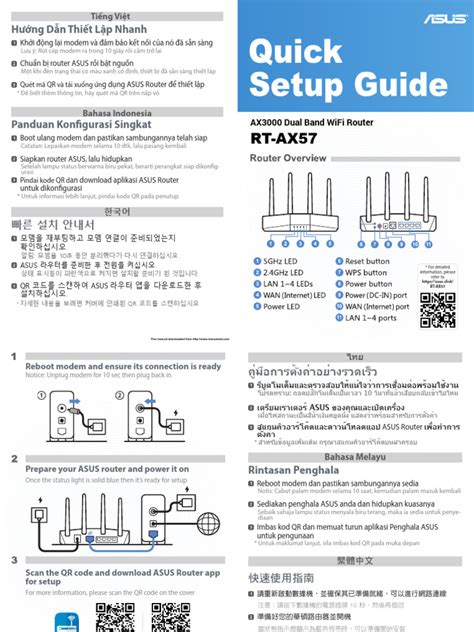
Setting it up was surprisingly painless. I’m comfortable with manual configurations, but I decided to try the mobile app first to see how it handled the process. It took me about ten minutes from plugging it in to having a live SSID. I noticed that the initial firmware update was mandatory to get the best stability, so that was the first thing I did. One thing that bothered me early on was the length of the power cord; it's a bit short, which limited where I could place it on my shelving unit without using an extension. However, once it was positioned, the light indicators were clear without being so bright that they lit up the room at night—a small detail, but one I appreciated since my workspace doubles as a guest room.
Six Months of Performance: My Real-World Findings
After testing for several months, the biggest change I noticed wasn't just raw speed, but "snappiness." When I click a link or start a video, the latency feels significantly lower than it did on my old AC1900 setup. This is likely due to the improved efficiency of Wi-Fi 6. In my 1,800-square-foot home, the coverage is impressive. I have the router centrally located in the living room. I found that I get full bars in every room, including the master bedroom which is behind two thick walls. Even in the backyard, I can still pull about 200 Mbps on my phone, which is plenty for music or checking emails while grilling.
However, I was surprised by how much the 5 GHz signal drops off once you step outside. While the 2.4 GHz band is a workhorse for distance, the high-speed 5 GHz band struggles with the brick exterior of my house. I also noticed that if I enabled the "Smart Connect" feature—which merges the 2.4 and 5 GHz bands into one name—my older smart plugs would occasionally lose their minds and disconnect. After a month of frustration, I turned Smart Connect off and gave the bands separate names. This immediately solved my smart home stability issues. If you have a lot of cheap 2.4 GHz-only IoT devices, I highly recommend doing the same.
Gaming performance was another area where I spent a lot of time. As an occasional player of fast-paced shooters, I’m sensitive to "lag spikes." While a wired connection is always betting, I tested the Rt Ax3000 over Wi-Fi for a few weeks. What I found was that the jitter remained remarkably low even when my partner was streaming a 4K movie in the next room. The Quality of Service (QoS) settings are actually useful here; I was able to prioritize my gaming PC’s traffic with a simple toggle in the menu. It didn't magically lower my ping, but it prevented it from jumping from 30ms to 500ms when someone else opened YouTube.
Find top-rated Electronics products at great prices.
See Deals →What I Loved and What Disappointed Me
One thing that really stood out to me was the security suite included with the router. Most brands are moving toward a subscription model where you have to pay a monthly fee for "enhanced security," but the Rt Ax3000 comes with lifetime security updates and basic parental controls built-in. I used the parental controls to schedule "internet blackout" times for my younger nephew when he visits, and the interface was intuitive enough that I didn't need to consult a manual. It’s refreshing to see a company not "nickel and diming" the user for features that should be standard.
On the flip side, I was a bit disappointed with the USB 3.0 port performance. I tried to use it as a basic Network Attached Storage (NAS) by plugging in an external hard drive to share files across the house. While it works for small documents, the transfer speeds were mediocre for large video files. It’s fine for a quick backup, but don't expect it to replace a dedicated media server. Additionally, the router gets quite warm to the touch. I haven't experienced any thermal throttling or crashes, but I wouldn't recommend tucked it away in a drawer or a cramped cabinet with no airflow.
Pros and Cons
- Pro: Exceptional Wi-Fi 6 Speeds – With 160 MHz support, I finally saw my laptop hit speeds that actually match my fiber internet plan.
- Pro: Solid Build Quality – Despite being plastic, it feels sturdy, and the antennas stay exactly where you angle them without drooping.
- Pro: No Subscription Fees – The security features and parental controls are included for the life of the product, which is rare these days.
- Pro: Excellent Mobile App – The app is one of the better ones I’ve used; it’s fast, responsive, and allows for remote management when I’m away from home.
- Con: Short Power Cable – Limits placement options unless you have an outlet directly behind your desk or shelf.
- Con: Mediocre USB Performance – Not fast enough for serious file sharing or high-bitrate 4K streaming from an attached drive.
- Con: Heat Dissipation – The unit runs noticeably warm; it requires an open space to prevent any long-term heat-related issues.
- Con: Smart Connect Issues – Can cause "connection loops" or drops for older 2.4 GHz devices if not configured carefully.
Comparison: Rt Ax3000 vs. The Alternatives
Before I bought this, I looked at several other models. In my experience, the main competitors are the older Wi-Fi 5 "Flagships" and the newer "Budget" Wi-Fi 6 models that lack the 160MHz bandwidth. Here is how I see the landscape based on the units I’ve tested or seen in action at friends' houses.
| Feature | Rt Ax3000 (My Pick) | Standard AC1900 | Budget AX1800 |
|---|---|---|---|
| Theoretical Top Speed | 3000 Mbps | 1900 Mbps | 1800 Mbps |
| Wi-Fi Generation | Wi-Fi 6 | Wi-Fi 5 | Wi-Fi 6 |
| 160MHz Support | Yes | No | No |
| Device Capacity | High (OFDMA) | Medium | Medium-High |
| Security Features | Included (No Sub) | Basic | Often Paid Sub |
The table shows why this router is a "sweet spot." You are essentially getting almost double the 5 GHz speed of a budget AX1800 router for a very small price increase. While an AC1900 router might be cheaper, it lacks the efficiency to handle 20+ smart home devices simultaneously, which most modern households now have.
Buying Guide: Is the Rt Ax3000 Right for You?
After using this for a long time, I think it’s important to realize that not everyone needs this much power, while others might need more. If you live in a small studio apartment and only have a laptop and a phone, this might be overkill. However, for most families or tech-heavy individuals, it hits the mark perfectly. Here is how I would break down the decision process if you are currently shopping.
First, consider your internet plan. If you are paying for anything above 500 Mbps, you need a router like this to actually see those speeds over Wi-Fi. Many people pay for Gigabit internet but use a router that caps out at 300 Mbps in real-world scenarios, which is effectively wasting money every month. The Rt Ax3000 ensures that your hardware isn't the bottleneck. I found that I could finally reach 700-800 Mbps on my phone while standing in the same room, which was impossible with my previous gear.
Second, think about your home's layout. If you have a massive, multi-story home over 3,000 square feet, a single Rt Ax3000 might struggle. In that case, you should look for its "Mesh" capabilities. I noticed that this model supports AiMesh, meaning if I ever move to a bigger place, I can just buy another compatible router and link them together to create a seamless network. It’s a great way to "future-proof" your purchase without buying a $500 mesh system upfront.
Looking for the best Electronics deals on Amazon?
See Deals →Third, assess your "technical patience." If you hate tech and just want something that works out of the box, the app-based setup here is great. But if you are a "pro-user," you will love the deep-dive web interface. I spent an afternoon playing with the traffic analyzer, which shows you exactly which devices are using the most data. I discovered my smart TV was "home-calling" and using a weird amount of bandwidth even when it was off. Being able to see and control that is a huge plus for me.
Who should buy this?
In my opinion, this router is perfect for families with 2-4 members who all stream, game, or work from home simultaneously. It’s also the ideal choice for someone moving into their first home who wants a solid foundation that won't need an upgrade for at least 4-5 years. If you value privacy and don't want to pay monthly fees for security, this is arguably the best value on the market.
Who should avoid this?
If you have an extremely large house with thick concrete walls, you might be better off starting with a dedicated triple-band mesh system. Also, if you are a hardcore data enthusiast who needs 10Gbps LAN ports for a local server, this is a consumer-grade device and won't satisfy those extreme enterprise-level needs. One thing I'll mention: if you find yourself in a very congested apartment building with 50 other Wi-Fi signals around you, the lack of a 6 GHz band (Wi-Fi 6E) means you are still competing for space on the crowded 5 GHz spectrum.
Conclusion
After six months of daily use, I can confidently say the Rt Ax3000 lived up to the hype. It isn't a "perfect" device—the short power cord is annoying, and the USB speeds won't win any awards—but it excels where it matters most: reliability and speed. I haven't had to manually reboot the router once since the initial setup, which is the highest praise I can give any networking hardware. It handled my frantic work calls, my late-night gaming sessions, and a massive influx of smart devices during the holidays without breaking a sweat.
What I found most compelling about the Rt Ax3000 is that it treats you like an adult. It gives you the tools to secure your network and optimize your traffic without hiding them behind a paywall. It’s a workhorse that looks decent on a shelf and delivers performance that used to cost twice as much just a couple of years ago. If you are tired of your internet "stuttering" or your current router just can't keep up with your growing list of connected gadgets, this is the upgrade I would recommend. In my experience, it’s the most balanced router on the market today, offering just enough "pro" features for enthusiasts while remaining simple enough for everyone else.